


Mercado Libre: Compras online
Mercado Libre
Shopping from a phone can be wonderfully convenient, but it can also become confusing when a marketplace mixes thousands of sellers, different delivery promises, changing prices, and varying product quality. I spent time using Mercado Libre: Compras online with that in mind, not just browsing attractive listings but also comparing products, checking seller information, following orders, and thinking about what happens when a purchase is less straightforward. My overall impression is that it is a capable, mature shopping app, especially for people who already know what they want and value having many options in one place.
Developed by Mercado Libre, this free shopping app is aimed at teenagers and older users, with a Teen content rating. It has been available since September 7, 2011, and its current version is 10.515.1 for devices running Android 6.0 or later. Its scale is immediately apparent: the app has passed one hundred million installs, while its average score sits at 4.8 from roughly twenty-four million ratings. Those figures do not guarantee that every transaction will be perfect, but they do reflect how deeply the service has become part of everyday online shopping.
How Mercado Libre feels to use today
The first thing I noticed is that the app is built around search rather than leisurely browsing. If I type a precise product name, model, size, or feature, I can quickly reach a large group of relevant listings. That makes it useful for practical purchases such as a replacement charger, a kitchen appliance, school supplies, furniture accessories, or a particular electronic component. The experience is less satisfying when I am only vaguely interested in a category, because the volume of results can make the decision harder instead of easier.
Related News

How Walmart: Shopping & Savings Redefines Mobile Retail

Why Shop: All Your Favorite Brands Dominates Mobile Shopping
Product pages usually require careful reading. I do not treat the first attractive photo or the lowest displayed price as the final answer. I look at the exact description, included accessories, condition, variations, delivery estimate, seller history, and recent buyer comments. This habit matters because similar-looking listings may represent different versions of the same item. A phone case can fit one generation but not another, and an appliance listing may refer to a single component rather than the complete setup shown in its images.
The app is strongest when I use it as a comparison workspace. I open several listings, note differences in specifications and delivery, and then return to the seller details before buying. That is more reliable than assuming the cheapest result is the best deal. In my experience, the marketplace rewards a patient buyer who checks the small print, while a rushed buyer can easily select an unsuitable variation.
Related News

Why WhatsApp Messenger Still Makes Everyday Communication Feel Easy

Jurassic World: The Game Is the Better Dino Tycoon for Strategic Players

Threads in Real Life: Who Should Join, Lurk, or Leave

How SHEIN Turned Shopping Into an Endless Content Feed

How to Make Fortnite Feel Smarter on Mobile

Should You Switch to Microsoft Outlook on Mobile?
Delivery is one of the main reasons to choose this service. The store summary emphasizes opportunities with delivery in twenty-four hours, and fast arrival can make a real difference when I need a replacement item rather than a future purchase. Still, I read the promise attached to the specific listing and destination instead of assuming that every product qualifies. Delivery speed is not a universal property of the app; it depends on the item, seller, location, and fulfillment route shown during the purchase process.
A realistic everyday purchase
Imagine that a coffee maker stops working on a weekday morning. I might search for the exact model first, then compare a compatible replacement with a newer alternative. I would check whether the listing includes the correct voltage, filter holder, warranty information, and delivery estimate. If one seller offers a slightly cheaper product but cannot deliver until much later, the more expensive option may be the sensible choice. The app makes this comparison convenient, but it does not make the decision for me.
That distinction is important. Mercado Libre is not a traditional single-retailer catalog where every item follows one uniform standard. It is a marketplace, so the seller is part of the product experience. The app gives me tools to assess that relationship, but I still need to use them. I pay attention to the seller's track record, the wording of the listing, and whether questions from previous buyers were answered clearly.
Gallery
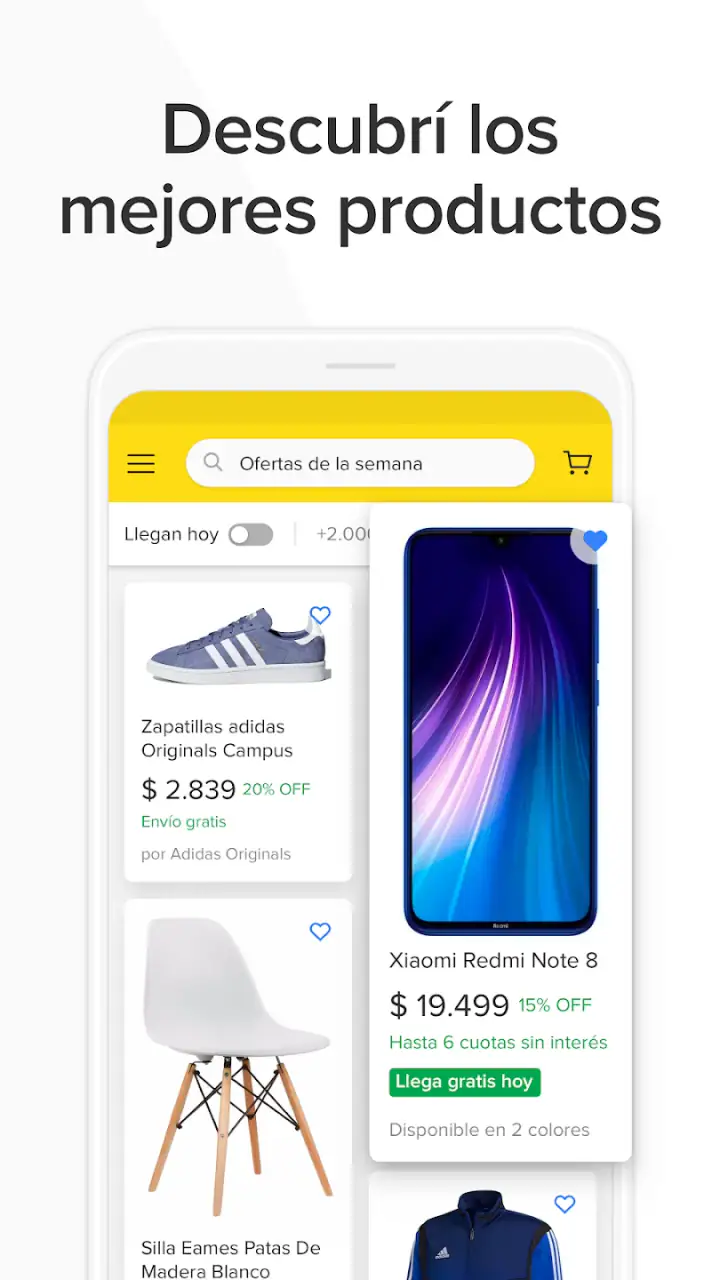
What has changed and what the current version means
The current version, 10.515.1, shows that this is an actively maintained product rather than a frozen shopping utility. I see its evolution less in one dramatic feature than in the way the app brings search, product discovery, order information, and account activity into a single mobile workflow. That matters for existing users because a mature marketplace has to handle more than a simple product grid: it must help people move from research to purchase and then keep track of what happens afterward.
I would not interpret the version number as a promise that every part of the experience has been redesigned. The basic rhythm remains familiar: search, filter, inspect, choose a seller, confirm the order, and monitor delivery. That continuity is good for regular shoppers because there is no need to relearn the entire service. At the same time, users who expect every update to introduce a visible new capability may find the evolution more practical than exciting.
The app's long presence, beginning in 2011, also affects how I judge it. It feels designed for repeated use rather than a single transaction. Returning to an account, checking previous purchases, and comparing new offers against familiar products are more useful than flashy presentation. For me, that is a sign of product maturity: the app's value comes from reducing friction across many ordinary purchases.
Existing users should still expect some variation between listings. An improved interface cannot remove differences in seller communication, packaging, stock accuracy, or delivery handling. The app can present the information, but the underlying marketplace remains diverse. I therefore see the current version as a better-organized doorway into a large ecosystem, not as a guarantee of identical service from every merchant.
Useful habits that make the app safer and faster
My first practical tip is to search twice: once with the broad product name and again with the exact model or technical identifier. The broad search helps reveal alternatives, while the precise search reduces the chance of buying a visually similar but incompatible item. This is particularly useful for cables, printer supplies, replacement parts, storage devices, and accessories where a small specification can determine whether the purchase is useful.
My second tip is to separate the product decision from the seller decision. I first decide which version meets my needs, then compare sellers offering that version. Otherwise, a low price can pull me toward a listing with a different capacity, condition, or included accessory. This two-step method takes a little longer but prevents a common marketplace mistake: comparing prices for products that are not actually equivalent.
A third insight is to use buyer questions and reviews as specification checks, not just as general opinions. If several buyers ask whether an accessory is included, whether a particular size is available, or whether the item matches the photographs, that tells me where the listing may be unclear. I do not rely on one emotional review to judge a seller, but repeated comments about the same detail deserve attention.
I also keep the order page available after checkout instead of relying only on memory or a notification. That gives me a central place to follow the purchase and notice whether the status changes as expected. If I am buying something time-sensitive, I save the promised delivery information mentally before confirming, because that is the point at which the purchase fits my schedule—or does not.
For expensive electronics, I document what I ordered by keeping the listing details and checking the package as soon as it arrives. This is not a criticism unique to Mercado Libre; it is a sensible habit for any marketplace. However, it is especially relevant here because the app connects buyers with many different sellers and product conditions. A careful record makes it easier to identify a mismatch quickly.
Where it compares well with other shopping options
Compared with a retailer's own app, Mercado Libre usually gives me a broader field of sellers and alternatives in one search. That is valuable when a local store does not carry a niche item or when I want to compare several brands without visiting multiple websites. The trade-off is that the shopping process requires more judgment. A single-retailer catalog may feel more consistent, while this marketplace gives me more choice and more responsibility.
Compared with classified-ad platforms, it feels more structured for ordinary online purchases. Product pages, purchase flows, and order tracking make it more suitable when I want a defined transaction rather than an informal conversation with a nearby seller. Classified services can be better for local pickup, unusual secondhand goods, or direct negotiation, but I prefer Mercado Libre when I want the buying process organized inside one account.
Compared with price-comparison tools, the app is more actionable because I can move from research to a listing without switching between several services. A comparison site may help me discover that another retailer is cheaper, but it may not provide the same marketplace selection or order context. I use Mercado Libre when convenience and variety matter more than finding the absolute lowest price everywhere.
There is also a difference between browsing on a computer and using the mobile app. A large screen is better for comparing long specifications, opening multiple pages, and studying detailed product information. The phone app is better for quick checks, tracking an order while away from home, or buying something when I already know the exact item. I would choose the mobile experience for speed, but I would not hesitate to use a larger screen for a complicated purchase.
The friction points I would not ignore
The biggest limitation is information overload. A large number of results can look like freedom, but it also increases the time needed to identify the genuinely suitable option. Filters help, yet they do not replace reading. If I want a quick, standardized purchase with no interest in comparing sellers, a direct retailer may be less tiring.
Another weakness is the uneven quality of listings. Some descriptions are precise and professionally organized; others leave important details buried or unclear. Photos can also show accessories or arrangements that are not part of the sale, so I treat the written listing and variation selector as more important than the image alone. This is where the app's convenience meets the reality of a multi-seller marketplace.
Fast delivery can create unrealistic expectations if I focus on the general promise rather than the individual listing. I check the delivery information for my address before paying, especially for gifts, travel equipment, replacement parts, or anything needed for a specific date. The app can make an urgent purchase possible, but I would not use it as my only plan when a missed delivery would cause serious trouble.
I am also cautious with impulse buying. Personalized discovery and a constant stream of offers can encourage me to add items that were not part of the original plan. My solution is simple: I decide what problem the product solves, compare it with at least one alternative, and only then complete the purchase. That small pause improves the value of the app more than endless scrolling does.
Who should use it and who may prefer something else
I recommend it to people who want a broad selection, enjoy comparing alternatives, and are comfortable checking seller information before ordering. It is particularly useful for shoppers looking for specific models, hard-to-find accessories, household replacements, and products that may not be available in nearby stores. The free price also makes it easy to keep as a practical shopping tool rather than committing to a subscription.
I would be more cautious recommending it to someone who dislikes marketplace decisions. If you want every product to follow the same return process, packaging standard, and support experience, a direct retailer may feel clearer. I would also suggest another route for highly specialized purchases where professional advice, installation, or guaranteed compatibility matters more than selection.
Parents and younger users should remember that the app carries a Teen content rating and can make purchasing very easy. I would use account controls and payment habits appropriate to the household, especially on a shared device. The convenience that helps an adult replace a needed item can also make an unplanned purchase happen quickly.
What I would watch before relying on it regularly
For current users, I would watch how future updates refine search clarity, product comparisons, delivery information, and post-purchase communication. Those areas have the greatest practical effect on whether the marketplace feels trustworthy and manageable. A new visual design would matter less to me than clearer distinctions between product variations and more useful context around seller performance.
I would also pay attention to how the app balances speed with transparency. Faster checkout is welcome, but not if important conditions become easier to miss. The best evolution for this service would help me make a confident decision quickly, not simply encourage me to complete a purchase sooner.
My final view is positive but deliberate. Mercado Libre: Compras online is a strong everyday shopping app when I use its breadth intelligently: search precisely, compare equivalent products, inspect the seller, verify delivery, and read the details before paying. Its enormous reach and high average rating explain why it is so widely used, but the real benefit comes from combining that reach with careful judgment.
I would install it for variety, convenience, and the ability to handle research and ordering in one place. I would not treat it as a substitute for reading, nor assume that the cheapest listing is automatically the smartest purchase. For shoppers willing to spend a few minutes checking the important details, it can turn a scattered search into a manageable buying decision. For those who want a completely uniform retail experience, a single-brand store may still be the better fit.
FAQs for Mercado Libre: Compras online
What platforms is Mercado Libre: Compras online available on?
Mercado Libre: Compras online is available for both Android and iOS platforms. Users can download the app from the Google Play Store for Android devices and the Apple App Store for iOS devices. The application is designed to offer a seamless shopping experience across various devices.
Is it safe to make purchases through the Mercado Libre app?
Yes, Mercado Libre implements robust security measures to protect user information and transactions. The app uses encryption and secure payment gateways to ensure that your payment details remain confidential. Additionally, Mercado Libre offers a buyer protection program, providing an additional layer of security for transactions.
Are there any fees associated with using Mercado Libre: Compras online?
There is no fee for downloading or using the Mercado Libre app itself. However, certain transactions may include additional costs such as shipping fees, taxes, or service charges, depending on the seller and the item's location. Always review these details before finalizing a purchase.
Can I sell items on Mercado Libre through the app?
Yes, Mercado Libre: Compras online allows users to sell items directly through the app. You can list products by creating a seller account, uploading photos, and setting prices. The app provides tools to manage your listings, track sales, and communicate with buyers, making it convenient for sellers.
How does the rating and review system work on Mercado Libre?
The app features a comprehensive rating and review system where buyers can rate their purchase experience and leave feedback for sellers. This system helps maintain transparency and trust within the marketplace. Sellers are also rated based on their reliability and service quality, assisting buyers in making informed decisions.
Pros
- User-friendly interface for easy navigation.
- Wide variety of products available.
- Secure payment options enhance trust.
- Fast shipping with tracking updates.
- Detailed product descriptions and reviews.
Cons
- Some items may have higher prices.
- Limited customer support response times.
- Occasional app crashes reported.
- Ads can be intrusive at times.
- Not all sellers offer free returns.


